Chem Kits 4 Kids
Kits:

This kit is a baking soda and vinegar reaction.
Directions:
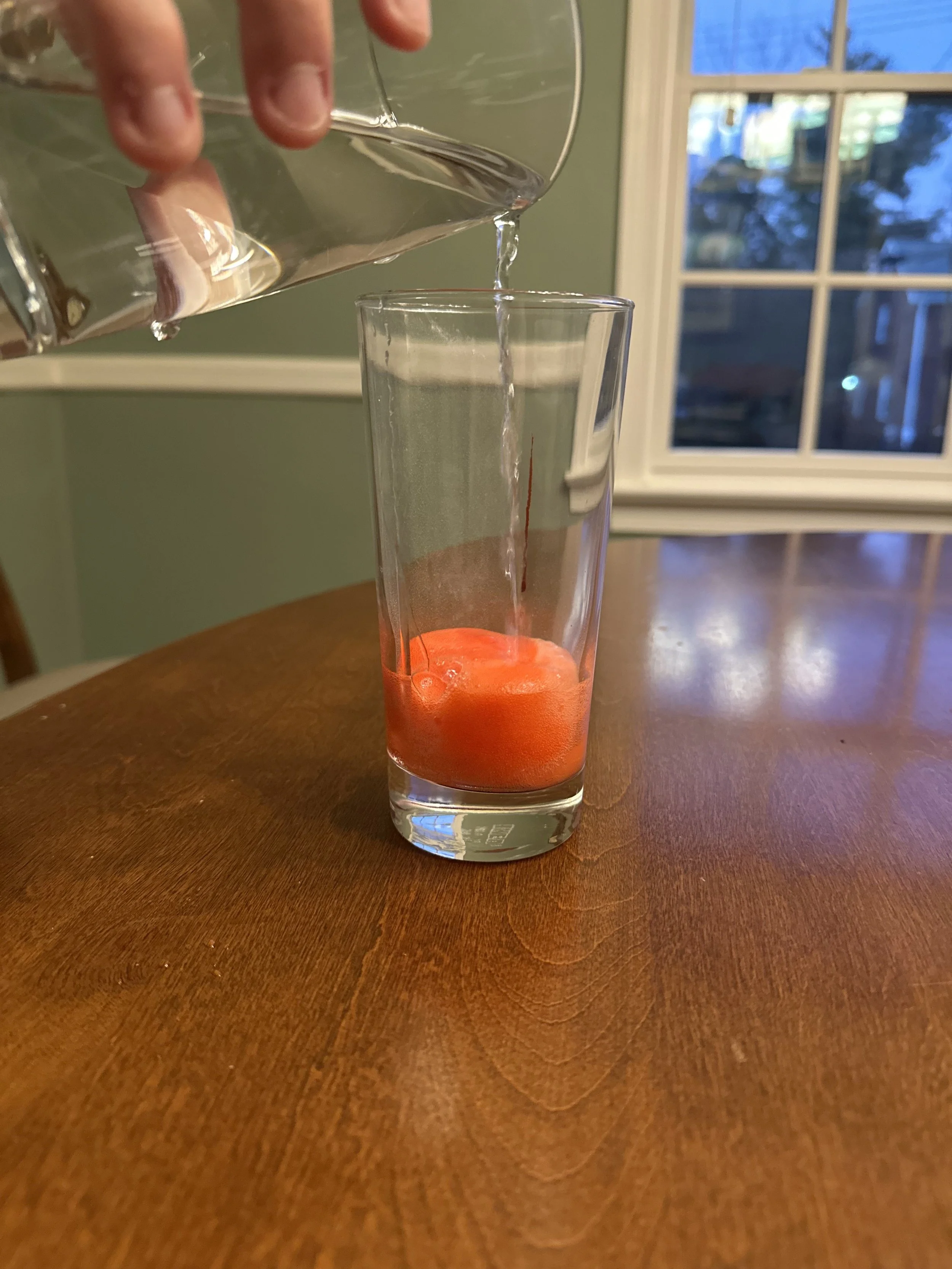
Place a small amount of baking soda in the bottom of your cup
Add food dye
Add vinegar to the cup
Watch it bubble
What is happening?
Baking soda and vinegar react because of something called the pH Scale. On a scale from 1- 14, if something is 7, it has a neutral pH. Anything below 7 has an acidic pH, and anything above 7 has a basic pH. Vinegar is an acid (acidic pH), but baking soda is a base (basic pH), so when combined, they produce carbon dioxide gas. This gas tries to escape into the air, but has a hard time creating the fizzy reaction you get.
Directions:
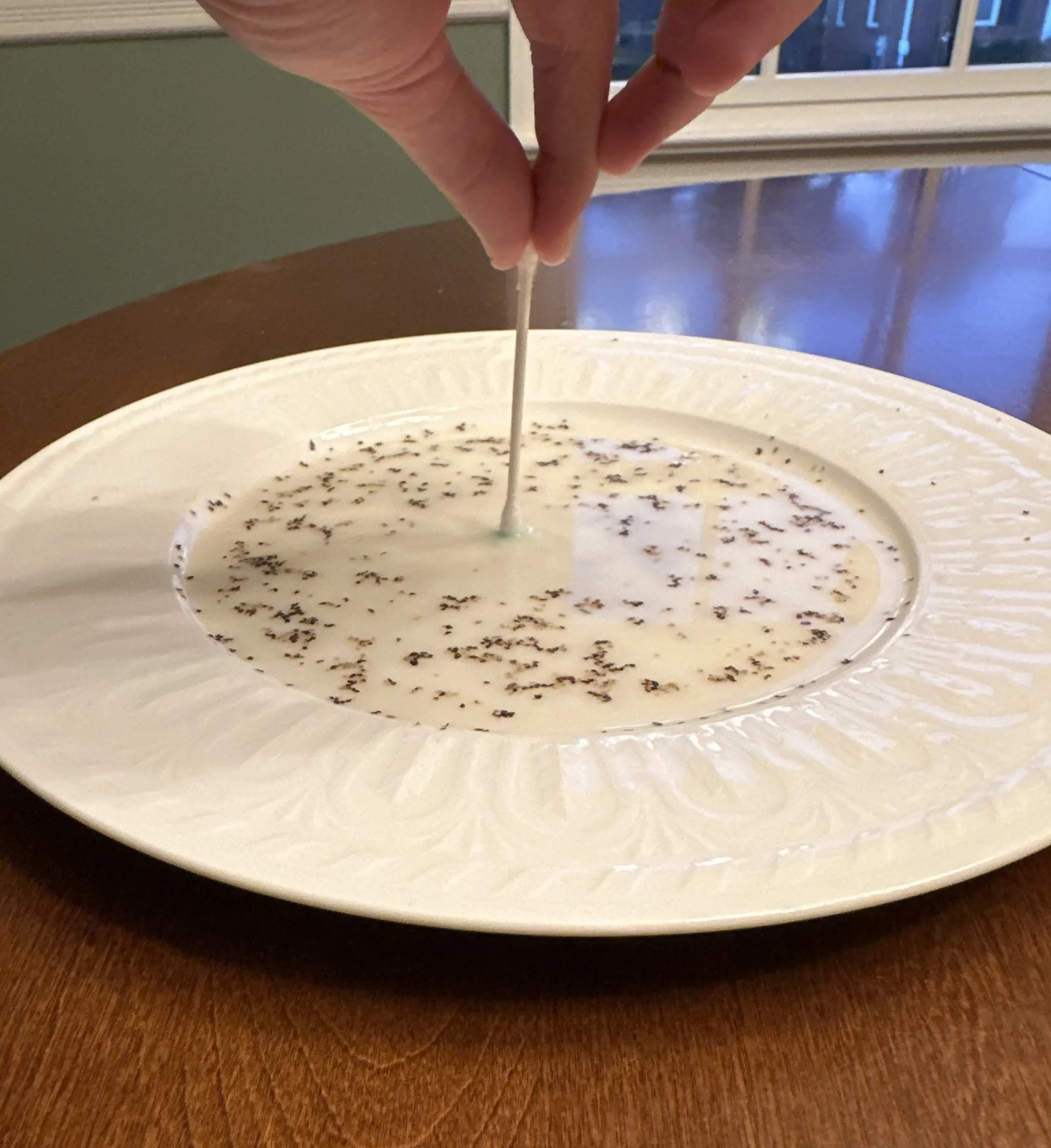
Pour a thin layer of milk into the plate, so that it covers the whole plate in a thin even coat
Add the pepper ontop of the milk(it should be floating on top)
Dip your q-tip into the dish soap, only a little bit will do
Then dip the tip of your q-tip into the center of the milk and pepper plate
The pepper should be repelled by the q-tip
What is happening?
The milk has surface tension, which is the little molecules that make milk, milk, want to stay attached to one another, and they form long chains. The pepper floats due to this surface tension. The dish soap breaks those long chains of milk molecules and pushes away the pepper on top because of those broken bonds.

Directions:
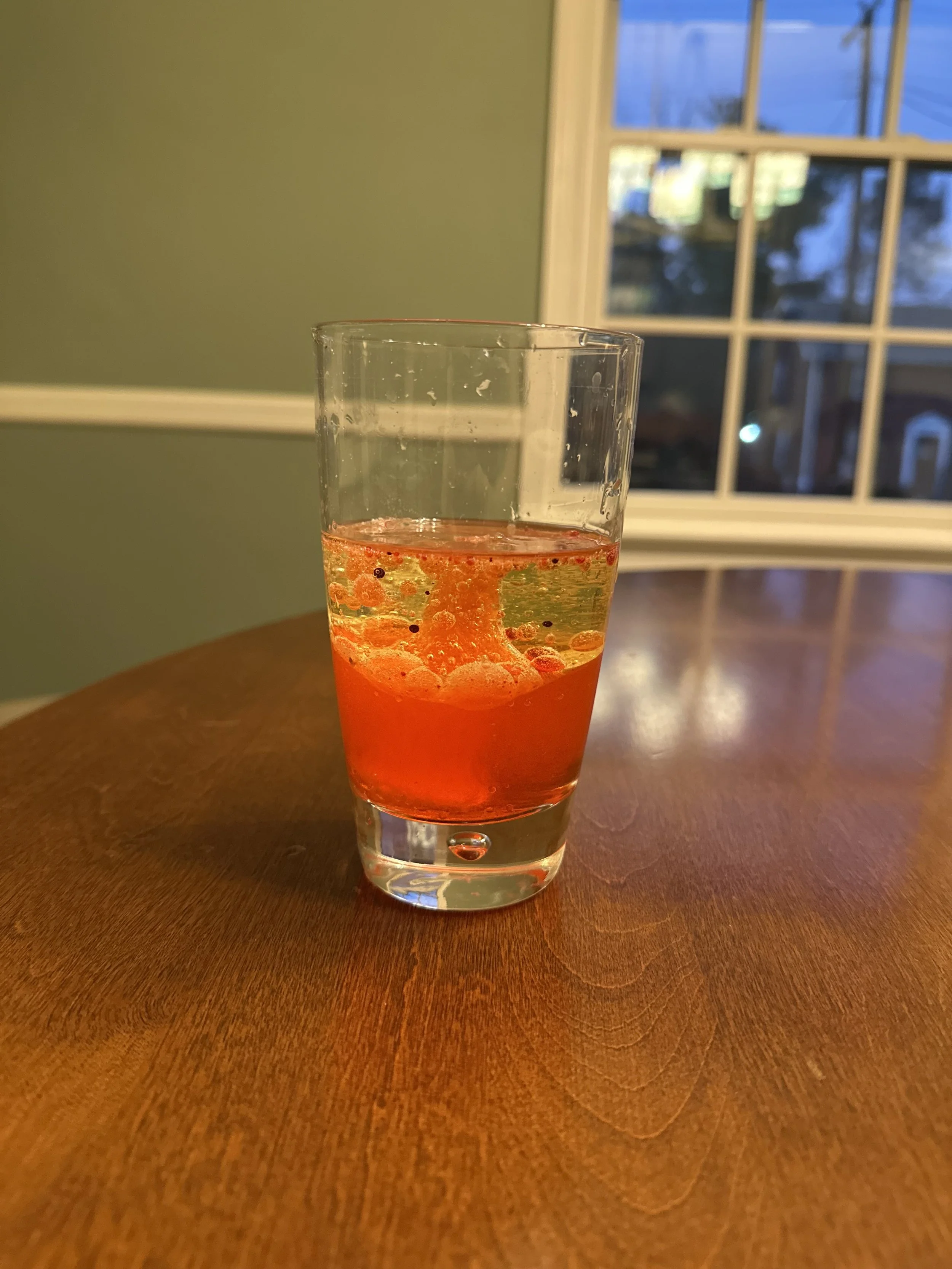
Add oil to a tall clear container
Angle a spoon above the oil and pour the water down into the cointainer ontop of the spoon
Wait until both liquids settle, then add the food dye of your choice
Add half of an Alka-Seltzer tablet into the contianer
Observe
What is happening?
The oil and water have different densities, which is how much mass or weight is in a certain volume or space, causing them to not mix with one another. The Alka-Seltzer causes the water to have air pockets which rise to the surface of both the oil and water, but becuase the water is densier than the oil they sink back down. This causes a similiar effecet to a lava lamp, but with household materials.
Our mission:
To help young kids become interested in science and give equal opportunity for science outside of the classroom.